One year ago, the Palisades and Eaton Fires burned more than 38,000 acres and destroyed over 16,000 structures across Southern California communities. When 80-100 mph hurricane-level offshore winds fueled fast-moving firestorms across Southern California, the Newsom administration’s prepositioned resources were critical in helping emergency personnel act more quickly and save lives.
Here’s how California’s emergency system responded when minutes mattered, and how that response is shaping the state’s approach to future fires.
Coordinated Response to the Palisades and Eaton Fires
While Southern California faced multiple fires in early 2025, the two most devastating fires were the Palisades and Eaton Fires. The Palisades Fire burned through Pacific Palisades and spread into Malibu and the unincorporated communities of Topanga Canyon, while the Eaton Fire burned in Altadena and nearby foothill neighborhoods.
Ahead of the firestorm and heeding high-wind advisories, Cal OES worked with partners to anticipate extreme conditions, share critical fire-weather information, and facilitate the prepositioning of resources, allowing for first responders to strategically deploy. As the state’s leadership hub during all major emergencies and disasters, Cal OES led a unified, whole-of-government response – coordinating statewide mutual aid, activating the around-the-clock State Operations Center, and supporting local responders on the ground.
In the days and months that followed, unprecedented recovery efforts began immediately. Local partners, fire and emergency personnel, and state agencies worked side-by-side in a comprehensive effort to stabilize communities, address immediate needs and begin long-term recovery.
The coordinated efforts before, during, and after the LA fires were vital in streamlining operations and helping survivors quickly get information and resources.
Unified Preparedness, Response, and Recovery
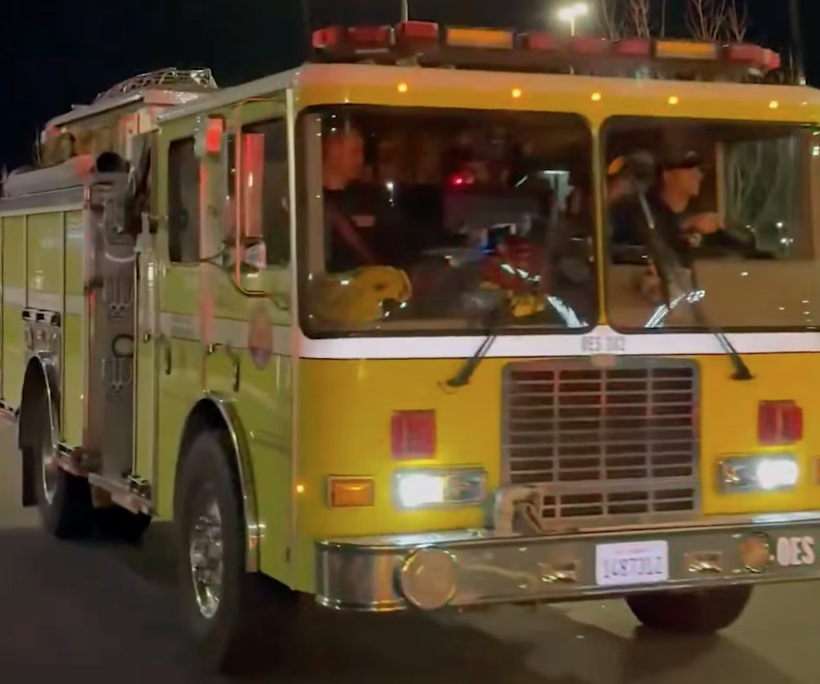
Anticipating potentially extreme fire weather, Cal OES was expeditious in approving local prepositioning resource requests. Through the California Fire and Rescue Mutual Aid System, Cal OES prepositioned 88 local firefighting resources and more than 100 specialized personnel within Southern California. When 80-100 mph hurricane-level offshore winds fueled fast-moving firestorms across Southern California, the prepositioned resources were critical in helping first responders act more quickly and save lives.
To further enhance the state’s posture, CAL FIRE relocated 45 more engines and six additional hand crews from Northern California to Southern California.
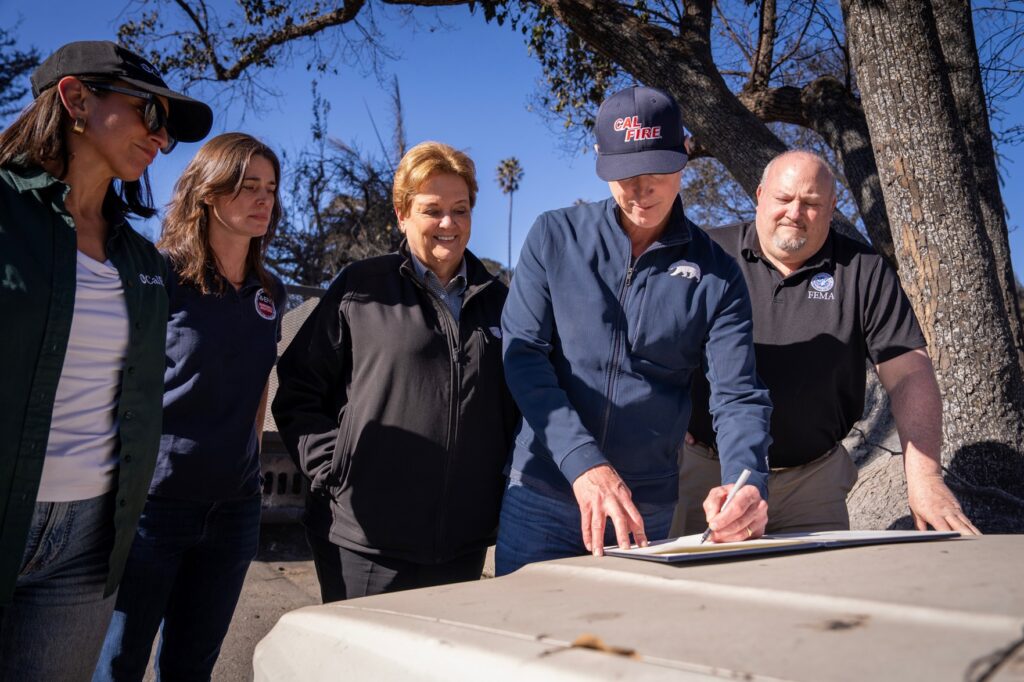
On January 7, California secured Fire Management Assistance Grants (FMAGs) to ensure the availability of vital resources to suppress the Palisades Fire and Eaton Fire. While on the ground in Pacific Palisades, Governor Gavin Newsom also proclaimed a state of emergency and subsequently received approval for a Presidential Major Disaster Declaration on January 8.
Cal OES coordinated more than 16,000 personnel and 2,000 pieces of fire equipment during the height of response operations for the LA Fires. Additionally, through Law Enforcement Mutual Aid (LEMA) requests, an additional 1,000 personnel were mobilized to support traffic control, evacuations, security patrols, infrastructure protection and anti-looting measures.
As the fires quickly progressed, support came from across borders, uniting agencies and communities in an effort to respond:
- Seven states provided 930 personnel and 240 pieces of equipment.
- Twenty countries extended support, with three countries deploying 165 experienced personnel through CAL FIRE, the U.S. Forest Service, and long-standing, established partnerships.

Access to life-saving information:
At the request of the Los Angeles County Office of Emergency Management, Cal OES issued 13 Wireless Emergency Alerts (WEAs). This operation marked the first time that the Cal OES Alert and Warning program assumed a primary alerting role on behalf of a local alerting authority during an active incident.
California enhanced public messaging to provide critical response and recovery information. With the support of Cal OES, California launched CA.gov/LAfires, a “one-stop-shop” website of resources for survivors. Initially unveiled during the firefight, the website was further expanded to include disaster recovery resources and allowed survivors to connect with state services faster.
Immediate Disaster Relief for Survivors
Cal OES swiftly opened Disaster Recovery Centers (DRCs) to provide critical aid to survivors. Cal OES recovery staff played a key role at the DRCs by coordinating resources, providing information, and connecting impacted residents, businesses, and community members with crucial local, state, and federal aid.
The DRCs supported more than 76,000 households, new and returning, with services including:
- Food benefits
- Driver’s license, identification and vehicle registration
- Unemployment and disability benefits
- Tax filing and extension assistance
- Help with insurance claims
- Tips for hiring contractors
- Public health resources and records
- Veteran’s resources
- Housing and shelter information
- Financial assistance and loans for survivors and small businesses
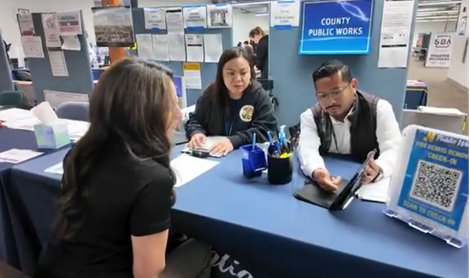
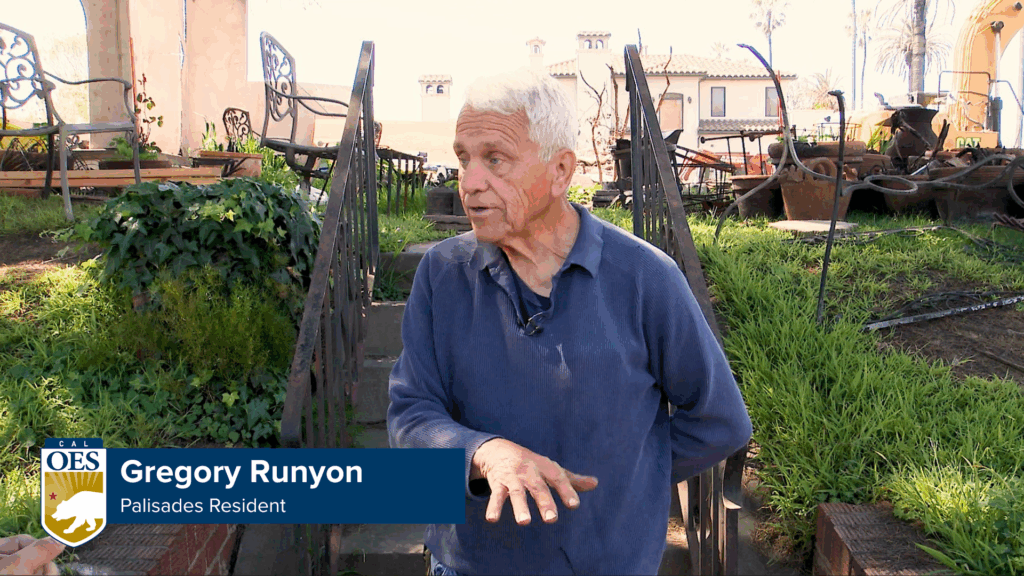
The DRCs provided critical debris removal information for survivors. According to Palisades fire survivor Gregory Runyon, the DRC supported him in making an informed decision about the government-run debris removal program.
“Each time I went [to the DRC], I got more comfortable,” Runyon said. “At no place did I ever have people talking to me that did anything but support me.”
In addition to providing direct support to survivors at DRCs, Cal OES and the Federal Emergency Management Agency (FEMA) opened a Joint Field Office (JFO) in Pasadena as a physical hub for unified command. The JFO was pivotal in coordinating all response and recovery efforts between federal, state, tribal, local, private sector, and non-profit partners.
Coordinated efforts resulted in key milestones for LA recovery:
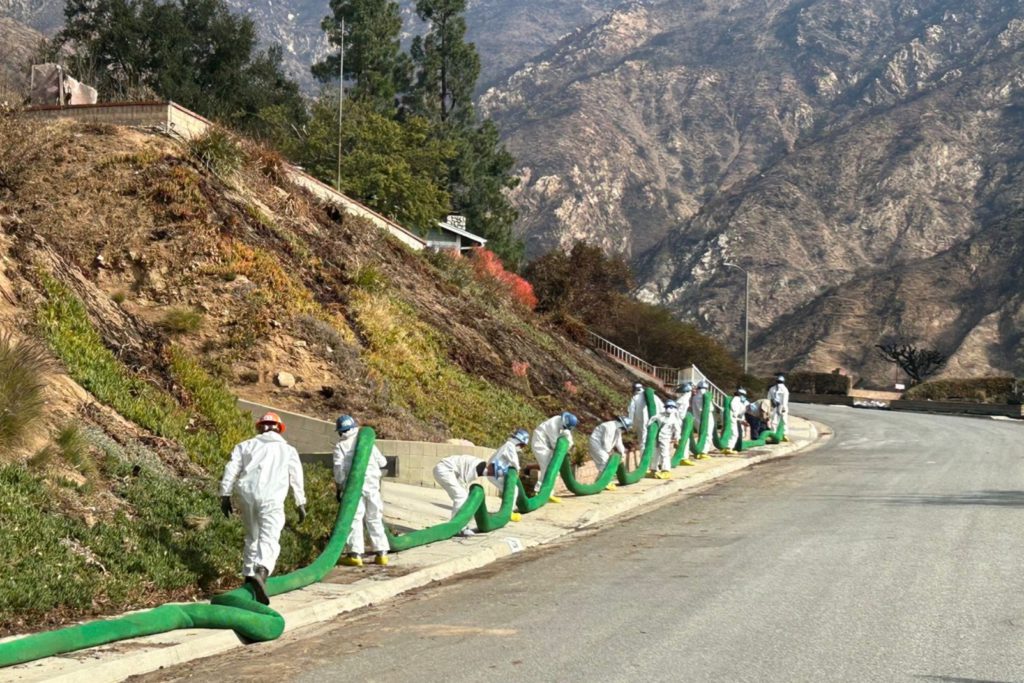
Watershed Protection: The Cal OES-led Watershed and Debris Flow Task Force placed 123 miles of protection materials around burn scar areas and cleared 300,000 cubic yards of debris from the Sierra Madre Villa Basin and Eaton Canyon Reservoir. The LA mission was the largest watershed protection mission completed, and mobilized more than 400 personnel.
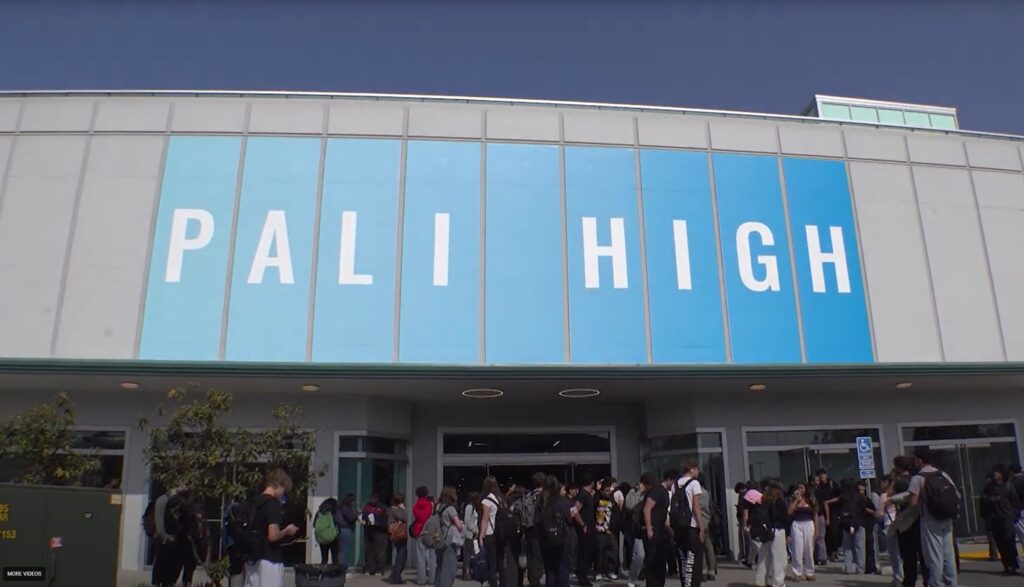
In-Person Instruction Resumed for Students: Executive action was taken to prioritize debris removal and fast-track rebuilding for eight impacted school sites, and continue education for 5,000 displaced students. Cal OES and the Interagency Schools Task Force engaged the affected schools to develop plans to accommodate displaced students and resume instruction.
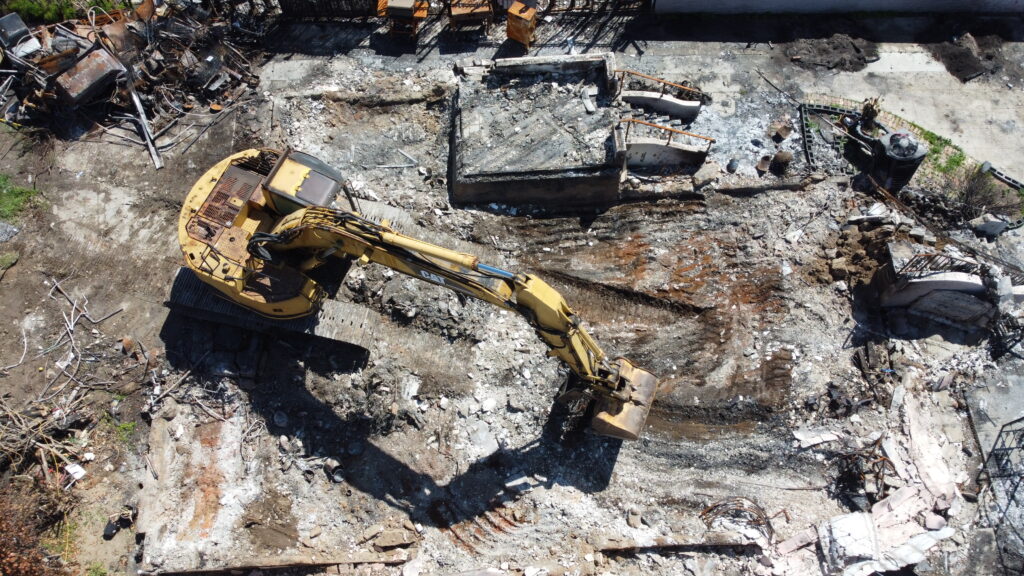
Debris Removal Completed in Record Time: At Governor Newsom’s direction, and led by the federal government, crews cleared 13,612 parcels of household hazardous waste in Phase 1 and removed remaining debris from 9,664 parcels in Phase 2. This cleanup was the fastest debris removal effort in modern U.S. history and the second largest in California history, following the Camp Fire. On the ground, the mission was led by the U.S. Army Corps of Engineers and FEMA, with crucial support from Cal OES and the City and County of Los Angeles.
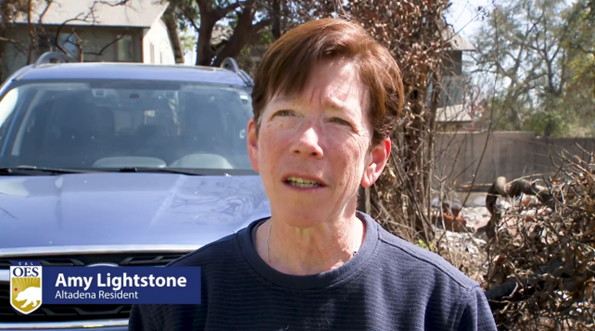
According to Eaton Fire survivor Amy Lightstone, the government-run debris removal program was essential for her to begin rebuilding.
“They will do it efficiently, and they will do it to the standards that need to be done,” Lightstone said. “It’s been amazing how many homes they’ve cleared.”
Drinking Water Restored: All nine water systems that were impacted were restored, resuming delivery of safe, clean drinking water through coordination with the State Water Resources Control Board, local water systems, and emergency response agencies.
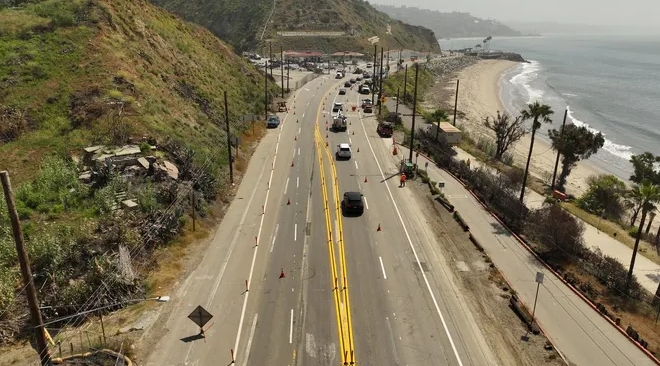
Pacific Coast Highway Reopened: The Pacific Coast Highway reopened ahead of Governor Newsom’s “end of May” deadline, with Caltrans restoring up to two lanes in each direction for travelers. Throughout the recovery, Cal OES’s Watershed and Debris Flow Task Force worked quickly to protect the highway from hazardous post-fire runoff, helping the route reopen safely.
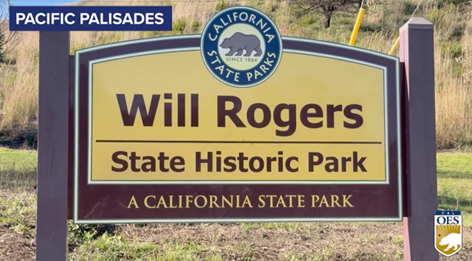
Will Rogers State Historic Park Reopened to the Public: After the LA Fires, Cal OES and debris removal crews used the park as a temporary debris removal hub, clearing 1.2 million tons of debris which resulted in 4,400 properties cleared in the Pacific Palisades Community. The reopening of the California State Park in November marked a significant milestone in recovery.
Cal OES’s Whole-Community Approach to Support Survivors
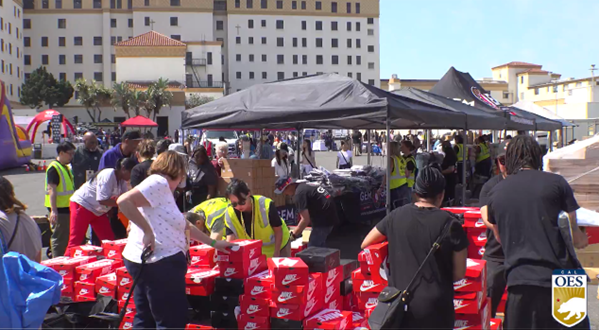
In an effort to address community needs, Cal OES answered more than 400 inquiries from elected officials, held 46 legislative briefings, and supported more than 275 community events and townhalls. These efforts enhanced coordination with all levels of government, private sector, community-based organizations, and nongovernmental organizations to fast-track support for survivors.
Cal OES honors the extraordinary resilience of the communities impacted by the LA Fires as they rebuild stronger, safer, and more resilient communities.
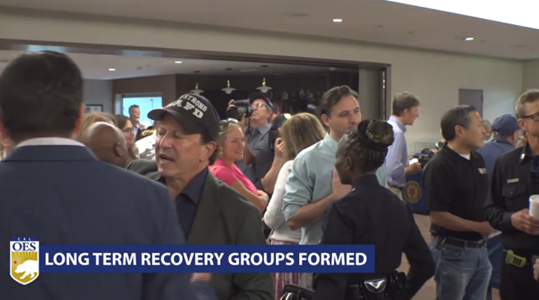
Nonprofit Community Event in Altadena (WATCH):
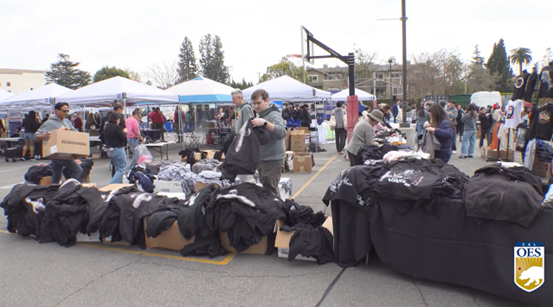
Palisades Long Term Recovery Group (WATCH):
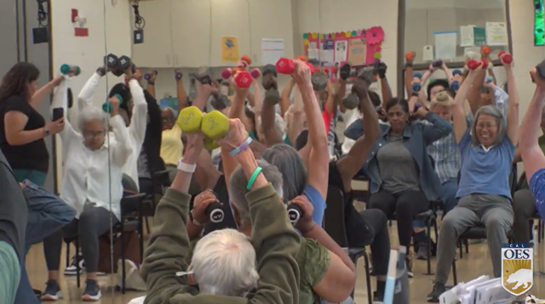
Loma Alta Senior Center in Altadena (WATCH):
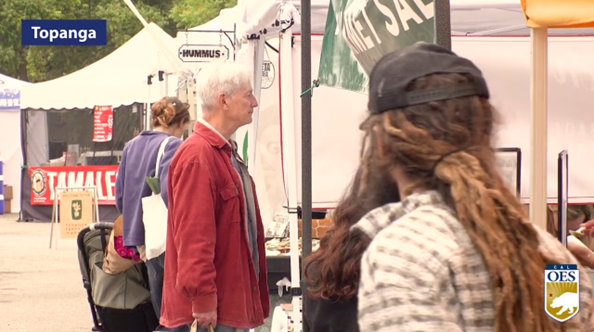
Topanga Farmers Market (WATCH):
Survivor Recovery Pop-Up Event (WATCH):